
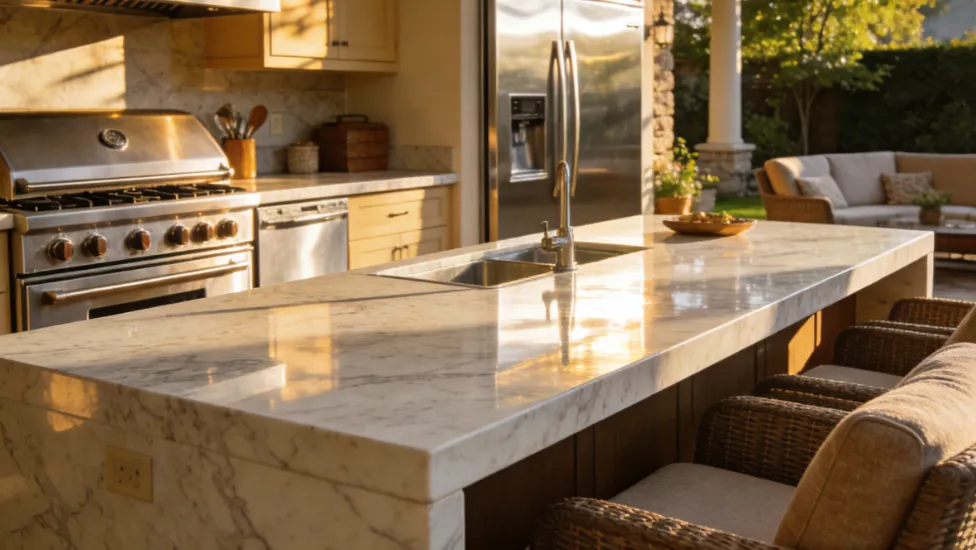
As someone who’s spent every summer weekend hosting backyard barbecues, lazy Sunday brunches, and evening gatherings with friends and family, I can tell you this: a well-designed outdoor kitchen isn’t just a luxury—it’s a game-changer. There’s nothing worse than rushing back and forth between your indoor kitchen and patio, juggling cold drinks, raw ingredients, and hot grills, while missing out on the fun. Over the past five years, I’ve refined my outdoor kitchen from a basic grill setup to a space that’s both functional and stunning, blending seamlessly with my backyard’s aesthetic while handling everything from casual weeknight dinners to big holiday parties. Today, I’m sharing my hard-earned tips for designing an outdoor kitchen that’s practical, beautiful, and tailored to how we actually live—and the best grills, fridges, and outdoor stoves that have made my alfresco cooking dreams a reality.
First, let’s get one thing straight: outdoor kitchens aren’t one-size-fits-all. What works for a small urban patio in Chicago will be very different from a sprawling backyard in Texas or a coastal deck in California. But no matter your space, budget, or climate, the key to success is balancing functionality and style. You want a space that’s easy to cook in, easy to clean, and easy on the eyes—one that feels like an extension of your home, not an afterthought. Let’s break this down step by step, starting with the design principles that will make your outdoor kitchen work for you, then diving into the equipment that’s worth investing in (and what to skip).
The Golden Rules of Outdoor Kitchen Design: Practicality First, Style Second (But They Can Coexist!)
When I first started planning my outdoor kitchen, I made the mistake of prioritizing looks over function. I fell in love with a sleek, minimalist design that looked amazing in photos—but had no counter space for prep, no storage for tools, and the grill was so far from the fridge that I was running inside every five minutes. Don’t make that mistake. Here are the three rules I live by now, and they’ve transformed how I use my outdoor space:
1. Follow the “Outdoor Work Square” (Not Just the Indoor Work Triangle)
Indoor kitchen designers swear by the “work triangle”—the distance between the stove, sink, and fridge. But outdoor kitchens are different: we’re not just cooking—we’re entertaining, prepping, and serving, too. That’s why I recommend the outdoor work square: four key zones that should be within easy reach of each other to keep the flow smooth and stress-free <superscript:3. These zones are:
- Cooking Zone: Your grill, smoker, or outdoor stove—this is the heart of your outdoor kitchen. It should be the focal point, but not so close to seating areas that smoke blows in guests’ faces (aim for at least 10 feet away from patio furniture or structures). It also needs proper ventilation to clear fumes and protect your island <superscript:3.
- Prep Zone: A dedicated countertop space for chopping veggies, marinating meat, and assembling plates. I can’t stress enough how important this is—skimp on prep space, and you’ll be balancing cutting boards on your lap or running inside to use your indoor counters. Add a small sink here if you can; it’s a game-changer for cleaning up without trekking indoors <superscript:3.
- Storage & Refrigeration Zone: Where you’ll keep cold drinks, raw ingredients, grilling tools, and utensils. This is where your outdoor fridge, ice maker, and storage cabinets live. The goal is to keep everything you need within arm’s reach of the cooking and prep zones—no more running inside for a cold beer or a spatula <superscript:1.
- Serve Zone: A space to set out finished food, plates, napkins, and condiments. This can be a small counter extension, a built-in buffet, or even a nearby outdoor dining table. The key is to keep it close to the cooking zone so you can plate food and get it to guests quickly <superscript:3.
Pro tip: If you’re short on space (like I was in my first small patio), prioritize the cooking and prep zones first—you can add storage or a serve zone later. And if you have a primary cook in the family, position the dining area off to the left or right of the grill at a 90-degree angle so they can chat with guests while cooking <superscript:8.
2. Choose Weather-Resistant Materials (Your Future Self Will Thank You)
Outdoor kitchens are exposed to sun, rain, wind, and even snow (depending on where you live). The materials you choose will make or break how long your space lasts—and how much maintenance it needs. After testing a few options, here’s what I recommend:
- Countertops: Go for something durable and easy to clean. I use natural stone (think granite or soapstone) because it’s heat-resistant, scratch-resistant, and ages beautifully. If you’re on a budget, concrete is a great alternative—it’s customizable (you can stain it any color) and holds up well to the elements. Avoid marble or quartzite—they’re porous and can stain easily from grease or wine <superscript:4.
- Cabinets & Frames: Stainless steel is my top pick—it’s rust-resistant, easy to wipe down, and looks sleek with any design style. If you prefer a warmer look, opt for teak or cedar wood (both naturally weather-resistant), but be prepared to seal them every year to prevent rotting. Avoid particleboard or MDF—they’ll warp and mildew in damp weather <superscript:4.
- Flooring: Slip-resistant is key, especially if you live in a rainy climate. I went with travertine pavers—they’re non-slip, durable, and have a natural, earthy look that complements my backyard. Other great options: concrete (stained or stamped), brick, or composite decking. Avoid smooth tiles—they get slippery when wet <superscript:9.
3. Lighting & Seating: Don’t Forget the “Entertaining” Factor
An outdoor kitchen isn’t just for cooking—it’s for gathering. That means you need lighting to keep the party going after sunset, and seating that’s comfortable for guests to hang out while you cook. Here’s what I did:
- Lighting: Mix ambient, task, and accent lighting. I have string lights above the seating area for a cozy, warm glow, under-cabinet LED lights for the prep zone (so I can chop veggies after dark), and a small spotlight on the grill so I can check on burgers without squinting. Avoid harsh overhead lights—they kill the mood <superscript:4.
- Seating: Keep it casual and functional. I have a built-in bench along the edge of the kitchen island (great for guests to sit and chat while I cook) and a separate patio set for dining. If you’re short on space, bar stools at the island are a great space-saver. Look for weather-resistant cushions (sunbrella fabric is the best—it resists fading and mildew) <superscript:9.
The Best Outdoor Kitchen Equipment: My Tried-and-True Picks (2026 Edition)
Now that we’ve covered design, let’s talk equipment. This is where the magic happens—and where it’s easy to overspend. I’ve tested dozens of grills, fridges, and stoves over the years, and these are the ones that have stood the test of time: reliable, easy to use, and worth every penny. I’ll break them down by category, so you can pick what’s right for your space and budget.
Grills: The Star of the Show
No outdoor kitchen is complete without a grill—and not all grills are created equal. The best grill for you depends on how you cook, how many people you host, and your budget. Here are my top picks, from budget-friendly to luxury:
1. Best Overall: Weber Spirit EP-435 4-Burner Gas Grill
If I could only recommend one grill, it would be this one. I’ve had my Weber Spirit for three years, and it’s still going strong—even through harsh Midwest winters. What I love most: it’s versatile enough to cook everything from burgers and steaks to veggies and even pizza, and it’s built to last. The 4 burners give you plenty of cooking space (enough for 10+ people), and the intense sear zone creates that perfect crust on steaks that we all crave <superscript:5.
Key features: Digital thermometer to monitor internal temperature, easy-to-clean grease management system, and a durable stainless steel construction that resists rust. It’s also relatively compact, so it works for small patios but has enough space for big gatherings. At around $829, it’s not the cheapest, but it’s a worthwhile investment—Weber grills are known for their longevity (I have a friend who’s had hers for 10 years!) <superscript:5.
2. Best Value: Weber Spirit E-210 2-Burner Gas Grill
If you’re on a budget or have a small space, this 2-burner Weber is a game-changer. It’s compact (fits on even the smallest decks), easy to use, and delivers the same quality Weber is known for—just on a smaller scale. I used this grill for two years before upgrading, and it never let me down. It’s perfect for couples or small families, and it’s easy to move if you need to rearrange your patio <superscript:5.
Key features: 2 burners (enough for 4-6 people), porcelain-enameled cooking grates (easy to clean), and a built-in lid thermometer. At around $400, it’s affordable, but still durable enough to last for years. The only downside: it doesn’t have as much cooking space as the 4-burner model, so it’s not ideal for big parties <superscript:5.
3. Best for Low-and-Slow Cooking: Camp Chef 24-Inch Wi-Fi Woodwind Pellet Grill & Smoker
If you’re a fan of smoked brisket, ribs, or pulled pork, a pellet grill is a must. I added this Camp Chef pellet grill to my outdoor kitchen last year, and it’s transformed my low-and-slow cooking game. Pellet grills use wood pellets (available in flavors like hickory, mesquite, and apple) to infuse food with that authentic smoky flavor, and they’re incredibly easy to use—no more babysitting a charcoal grill for hours <superscript:5.
Key features: Wi-Fi connectivity (so you can monitor and adjust the temperature from your phone—game-changer for busy hosts), a large cooking area (24 inches, enough for a whole brisket or multiple racks of ribs), and a built-in meat probe. It also doubles as a grill, so you can sear steaks or cook burgers when you don’t want to smoke. At around $700, it’s a bit of an investment, but if you love smoked food, it’s worth every penny <superscript:5.
4. Best for Small Spaces: Weber Q1200 Portable Gas Grill
If you have a tiny patio or balcony, this portable Weber is your best friend. It’s compact (about the size of a small suitcase), lightweight (easy to carry), and still delivers great grilling results. I used this when I lived in an apartment with a small balcony, and it was perfect for weeknight dinners for two. It runs on small propane canisters (easy to pick up at the grocery store), and it’s easy to clean <superscript:5.
Key features: 1 burner (enough for 2-3 people), porcelain-enameled cooking grate, and a lid that locks for easy transport. At around $200, it’s affordable and perfect for anyone with limited space. The only downside: it’s not ideal for big gatherings, but it’s great for casual use.
Outdoor Fridges: Keep Drinks and Ingredients Cold Without Running Indoors
An outdoor fridge is one of the most underrated additions to an outdoor kitchen—until you have one. No more running inside to grab a cold beer or a bag of ice; no more worrying about raw meat sitting out in the sun. Outdoor fridges are designed to withstand the elements (heat, rain, humidity) and keep your food and drinks at the perfect temperature. Here are my top picks for 2026:
1. Best Overall: Koolmore KM-OKS-OFRC-44 SS Outdoor Refrigerator
This is the fridge I have in my outdoor kitchen, and I couldn’t be happier with it. It’s a 4.4 cubic foot stainless steel fridge that’s built to last—with an IPX4 water-resistant rating, it can handle splashes and rain, so I never have to worry about it getting damaged during a summer storm <superscript:1.
Key features: Adjustable temperature control (32 to 50 degrees Fahrenheit, so you can keep drinks ice-cold or ingredients fresh), large storage capacity (holds up to 92 cans inside and 19 more in the door), and three durable glass shelves to keep everything organized. The door is reversible, so you can open it from the left or right—perfect for fitting into any space. At around $800, it’s a mid-range option, but it’s worth it for the durability and functionality <superscript:1.
2. Best Value: Ory Muse 24″ Outdoor Beverage Cooler
If you’re primarily using your outdoor fridge for drinks (and let’s be real, most of us are), this Ory Muse cooler is a great budget-friendly option. It’s a 4.9 cubic foot cooler that holds up to 180 cans, and it’s made with 304 stainless steel—durable and easy to clean <superscript:6.
Key features: Whisper-quiet operation (under 40 db, so it won’t disrupt your party), rapid cooling (gets down to 37°F in 6 hours), and LED lighting inside so you can find your drink easily at night. It’s also weatherproof, so it can handle extreme temperatures—from Arizona’s 110°F summers to New York’s freezing winters. At around $900, it’s slightly more than the Koolmore, but the rapid cooling and quiet operation make it worth it <superscript:6.
3. Best for Large Gatherings: Velieta 24″ Outdoor Refrigerator
If you host big parties often, this Velieta fridge is a must. It’s a 5.3 cubic foot fridge that holds up to 210 cans—enough for a crowd of 20+ people. It’s also incredibly quiet (37 db) and has blue LED lighting inside, which adds a fun, festive touch to your outdoor kitchen <superscript:6.
Key features: Durable stainless steel construction, adjustable shelves, and a door lock (great if you have kids or want to keep drinks secure). It’s also energy-efficient, so it won’t hike up your electricity bill. At around $700, it’s a great value for the size—perfect for anyone who loves hosting large gatherings <superscript:6.
4. Best Compact: FOM UP Stainless Steel 3-Tier Drawer Fridge
If you’re short on space, this compact drawer fridge is a game-changer. It’s a 3-tier drawer fridge that fits under a counter, so it doesn’t take up extra space. It’s mobile (thanks to built-in wheels), so you can move it around your patio as needed <superscript:1.
Key features: Waterproof design (so it can handle rain and splashes), temperature control, and three drawers to keep drinks and snacks organized. It’s perfect for small patios or outdoor kitchens where space is at a premium. At around $600, it’s affordable and functional—great for anyone who doesn’t need a full-size fridge <superscript:1.
Outdoor Stoves & Cooktops: Beyond the Grill
While the grill is the star, an outdoor stove or cooktop is a great addition for when you want to cook something that’s not grilled—like pancakes for brunch, pasta for a summer dinner, or soup for a cool evening. Outdoor stoves are designed to withstand the elements and deliver consistent heat, so you can cook just like you would indoors. Here are my top picks:
1. Best Overall: Camp Chef Everest 2X 2-Burner Outdoor Stove
This is the outdoor stove I use every weekend, and it’s never let me down. It’s a powerful 2-burner stove with 40,000 total BTUs (20,000 per burner), so it can boil water quickly and simmer sauces perfectly. The large cooking surface (21 x 9.5 inches) can fit two large pots or pans, so I can cook pancakes and eggs at the same time for brunch <superscript:2.
Key features: Excellent wind resistance (a nearly seamless windscreen keeps the flame steady even on windy days), fast boil time, and a piezo auto-igniter (no more fumbling with matches). It’s also durable—made with heavy-duty steel that can handle the elements. At around $300, it’s a great value for the quality. The only downside: it’s a bit bulky and heavy, so it’s not the most portable, but it’s perfect for a permanent outdoor kitchen setup <superscript:2.
2. Best Value: Gas One GS-3000 1-Burner Outdoor Stove
If you’re on a budget or only need a stove for occasional use, this Gas One stove is a great option. It’s a 1-burner stove with 10,000 BTUs—enough for boiling water, cooking pasta, or simmering sauces. It’s compact and lightweight (easy to store when not in use), and it runs on small propane canisters <superscript:2.
Key features: Easy to set up (no tools required), adjustable flame control, and a durable steel construction. At around $50, it’s incredibly affordable—perfect for anyone who doesn’t want to spend a lot on an outdoor stove. The only downside: it’s not as powerful as the Camp Chef, so it’s not ideal for cooking large meals <superscript:2.
3. Best Multi-Purpose: Coleman Cascade 3-in-1 Outdoor Stove & Grill
If you want a stove that can do it all, this Coleman 3-in-1 is perfect. It’s a stove, grill, and griddle all in one—great for maximizing space in small outdoor kitchens. I use the grill for burgers, the stove for cooking sides, and the griddle for pancakes or hash browns<superscript:2.
Key features: 3-in-1 design (saves space), 2 burners (20,000 total BTUs), and a non-stick griddle surface (easy to clean). It’s also portable, so you can take it camping or to a tailgate. At around $200, it’s a great value for a multi-purpose stove. The only downside: the grill surface is smaller than a dedicated grill, so it’s not ideal for big gatherings <superscript:2.
4. Best for Gourmet Cooking: Zempire 2-Burner DLX Wide Stove
If you’re serious about outdoor cooking and want to make gourmet meals, this Zempire stove is a must. It has 12,200 BTUs per burner (higher than most outdoor stoves), and a wide cooking surface that can fit 12-inch skillets and large pots. The flame control is incredibly sensitive, so you can simmer a delicate sauce or sear a steak with precision <superscript:7.
Key features: Push-button igniter (no matches needed), collapsible side panels (for easy storage), and compatibility with disposable propane canisters. It’s perfect for car camping or permanent outdoor kitchen setups. At around $175, it’s affordable for a high-performance stove. The only downside: the side panels aren’t great at blocking wind, so you may need to use a windscreen on windy days <superscript:7.
Bonus: Essential Accessories for Your Outdoor Kitchen
No outdoor kitchen is complete without a few key accessories. These are the items that make cooking and entertaining easier—and they’re worth investing in:
- Grill Tools Set: Look for a set with a spatula, tongs, fork, and brush—all made of stainless steel (rust-resistant). I recommend the Weber 3-Piece Grill Tool Set—it’s durable and easy to clean.
- Outdoor Sink: A small stainless steel sink with hot and cold water is a game-changer for cleaning prep tools and hands without running indoors. I have the Kohler K-2211-8-VS Outdoor Sink—it’s compact and durable.
- Ice Maker: If you host a lot of parties, an outdoor ice maker is a must. The Scotsman CU50PA-1A Undercounter Ice Maker is compact, makes ice quickly, and is built for outdoor use.
- Storage Cabinets: Stainless steel storage cabinets are perfect for keeping grilling tools, utensils, and extra propane tanks organized. I recommend the NewAge Products Outdoor Storage Cabinet—it’s durable and has plenty of space.
- Weather Cover: Protect your grill, fridge, and stove from the elements with a weather cover. Look for one made of heavy-duty fabric (like Sunbrella) that’s water-resistant and UV-protected.
Final Thoughts: Designing an Outdoor Kitchen That Works for You
At the end of the day, the best outdoor kitchen is one that fits your lifestyle, your space, and your budget. You don’t need to spend a fortune to create a space you love—start small (a grill and a prep table) and add to it over time. The key is to prioritize function first: make sure the work zones are flowy, the materials are weather-resistant, and the equipment is reliable. Then, add style with lighting, seating, and decor that reflects your personal taste.
My outdoor kitchen has become my favorite part of my home. It’s where I cook, entertain, and make memories with friends and family. Whether I’m grilling burgers on a Saturday afternoon, making pancakes for brunch on Sunday, or smoking a brisket for a holiday party, it’s a space that works for me—and it can work for you too.
So grab your grill, stock up on cold drinks, and get ready to enjoy the great outdoors—one delicious meal at a time. Your backyard (and your guests) will thank you.