Hi there, fellow plant lover (or aspiring plant parent)! If you’re anything like me, you’ve walked into a cozy café, a chic boutique, or a friend’s home and thought, “Why can’t my space feel this alive?” Lush greenery, vibrant blooms, and that subtle, fresh scent of nature—indoor plants aren’t just decor; they’re a way to bring the outdoors in, boost your mood, purify your air, and even add a touch of personality to every room. But let’s be real: not all of us have a “green thumb.” I’ve killed my fair share of succulents (RIP to my first jade plant) and watched perfectly good pothos wilt because I either forgot to water them or drowned them in love (and H2O). Sound familiar?
Over the past five years, I’ve gone from a self-proclaimed “plant killer” to someone who keeps a home filled with thriving greenery—from towering fiddle-leaf figs to tiny succulent arrangements, and even a few flowering beauties that bloom year-round. And here’s the secret: it’s not about being “good with plants”—it’s about choosing the right plants for your space, styling them in a way that feels intentional (and fits your decor), and using simple tools (yes, smart ones!) to take the stress out of care. No green thumb required, I promise.
Whether you’re a total beginner, a busy professional who travels often, or someone who wants to elevate their home with more greenery but doesn’t know where to start, this guide is for you. We’ll cover everything: how to pick the perfect plants for your light, space, and lifestyle; how to style them like a pro (no fancy design degree needed); the essential care tips that keep plants happy (even if you’re forgetful); and how to use smart devices—like automatic waterers, humidity monitors, and LED grow lights—to make plant parenthood easier than ever. Let’s dive in!
Part 1: Choose the Right Indoor Plants for Your Home (No More Plant Casualties)
The biggest mistake new plant parents make? Picking a plant because it looks pretty—without checking if it’s a good fit for their home. I’ve been there: I bought a stunning monstera deliciosa (swiss cheese plant) because it was all over Instagram, only to watch its leaves turn yellow and droop because my living room doesn’t get enough light. Spoiler: even the most beautiful plant will die if it’s in the wrong environment. So before you head to your local nursery (or scroll Amazon for plants), ask yourself three simple questions: How much light does my space get? How often can I water? Do I have pets or kids?
1.1 Light: The Most Important Factor (Plants Need Their “Sunshine Fix”)
Every plant has a light requirement, and ignoring this is the #1 cause of plant death. Let’s break down the light in your home—no fancy tools needed, just take a look around at different times of the day.
- Bright, Direct Light: These are spots near south-facing windows (in the Northern Hemisphere) where the sun shines directly for 4+ hours a day. Think: windowsills, near glass doors, or corners that get unfiltered sunlight. Plants that thrive here: Succulents (jade, echeveria), cacti, rosemary, basil, and bird of paradise. Pro tip: If the sun is intense (like in summer), use a sheer curtain to filter it—too much direct sun can burn leaves (yes, even succulents!).
- Bright, Indirect Light: This is the sweet spot for most indoor plants. It’s light that’s bright enough to read by, but not direct—think east-facing windows (morning sun, which is gentle) or west-facing windows (afternoon sun, filtered by a curtain). Spots a few feet away from south-facing windows also work here. Plants that thrive here: Monstera deliciosa, pothos, philodendron, spider plants, peace lilies, and ZZ plants. These are the “easy” plants that adapt well to most homes.
- Low Light: These are spots that are dim, even during the day—north-facing windows, hallways, corners far from windows, or rooms with small windows. Don’t worry—you can still have plants here! You just need ones that are tough and don’t need much sun. Plants that thrive here: Snake plants (mother-in-law’s tongue), ZZ plants, pothos (yes, they’re super adaptable!), peace lilies, and cast-iron plants. These are the “forgotten” plants—they can handle neglect and low light like champs.
Pro hack: If you’re unsure about light levels, download a free light meter app on your phone. It’ll tell you exactly how much light a spot gets, so you can pick the perfect plant. Trust me, this little step will save you from so much heartbreak (and wasted money).
1.2 Lifestyle: Pick Plants That Fit Your Routine (No Guilt Allowed)
Let’s be honest: If you’re a busy professional who travels for work, a parent with a toddler who likes to “water” plants (read: dump a full cup on them), or someone who forgets to water things for weeks, you don’t want a high-maintenance plant. Here’s how to match plants to your lifestyle:
- Busy/Forgetful Plant Parents: Go for low-maintenance, drought-tolerant plants. These guys can go weeks without water and still look great. Top picks: Snake plants, ZZ plants, succulents, cacti, and pothos. I travel for work 2–3 times a month, and my snake plant hasn’t missed a beat—even when I forget to water it for a month. Bonus: These plants are also great for people who overwater (we’ve all been there)—they prefer “dry feet” and won’t rot if you skip a watering.
- Plant Parents Who Love to Nurture: If you have time to water, mist, and prune, go for plants that need a little more attention. Top picks: Orchids, ferns (Boston fern, maidenhair fern), calatheas (prayer plants), and peace lilies. These plants love humidity and regular care, and they’ll reward you with beautiful blooms or unique foliage.
- Pet/Kid-Friendly Homes: Safety first! Many common indoor plants are toxic to cats, dogs, and kids, so it’s important to pick non-toxic options. Top picks: Spider plants, Boston ferns, parlor palms, areca palms, and African violets. My cat, Mochi, loves to chew on my spider plant, and I never have to worry—plus, spider plants are super easy to grow. Avoid: Monstera, pothos, peace lilies, and snake plants (all toxic if ingested).
1.3 Top 10 Indoor Plants for欧美 Homes (Proven to Thrive)
Based on my experience (and feedback from fellow plant parents in the US and Europe), these are the most reliable, beautiful, and easy-to-care-for indoor plants. They fit most homes, lifestyles, and decor styles—perfect for beginners and seasoned plant parents alike.
- Snake Plant (Sansevieria/Dracaena Trifasciata): The ultimate “set-it-and-forget-it” plant. It tolerates low light, drought, and neglect. Its tall, stiff leaves add a modern touch to any room, and it’s one of the best air-purifying plants (it removes formaldehyde and benzene from the air). Bonus: It grows slowly, so you won’t have to repot it often. Pet note: Toxic to cats and dogs.
- Pothos (Epipremnum Aureum): A trailing plant with heart-shaped leaves (variegated or solid green). It’s super adaptable—grows in low light, bright light, and even water (no soil needed!). Perfect for hanging baskets or trailing down shelves. If you forget to water it, the leaves will droop (a gentle reminder), and it’ll perk right back up after a drink. Pet note: Toxic to cats and dogs.
- Monstera Deliciosa (Swiss Cheese Plant): The Instagram favorite—and for good reason. Its large, holey leaves add a tropical, lush vibe to any room. It needs bright, indirect light and moderate watering (wait until the top 2 inches of soil are dry). It grows quickly, so you’ll need to repot it every 1–2 years. Pet note: Toxic to cats and dogs.
- ZZ Plant (Zamioculcas Zamiifolia): Another low-maintenance gem. It has glossy, dark green leaves that add a touch of elegance. It tolerates low light, drought, and even overwatering (to a point). Perfect for offices or dark corners. Pet note: Toxic to cats and dogs.
- Spider Plant (Chlorophytum Comosum): A classic for a reason. It has long, arching leaves (variegated or solid green) and produces “pups” (baby plants) that you can propagate. It’s non-toxic, air-purifying, and grows well in bright, indirect light. It’s also great for beginners—hard to kill! Pet note: Safe for cats and dogs (they love it!)
- Peace Lily (Spathiphyllum): One of the few indoor plants that flowers year-round (white, elegant blooms). It’s a great air-purifier and will “tell” you when it’s thirsty—its leaves droop slightly, and it perks up within hours of watering. It needs low to bright, indirect light and moderate humidity. Pet note: Toxic to cats and dogs.
- Succulents (Jade, Echeveria, Aloe Vera): Perfect for small spaces, shelves, or desktops. They come in a variety of shapes and colors, and they’re super drought-tolerant (water only when the soil is completely dry). They need bright, direct light (south-facing windows are best). Aloe vera is also great for burns—break off a leaf and apply the gel! Pet note: Most succulents are toxic to cats and dogs.
- Fiddle-Leaf Fig (Ficus Lyrata): A statement plant with large, violin-shaped leaves. It adds height and drama to any room. It needs bright, indirect light (avoid direct sun) and consistent watering (wait until the top 2–3 inches of soil are dry). It’s a bit finicky, but worth it for the aesthetic. Pet note: Toxic to cats and dogs.
- Boston Fern (Nephrolepis Exaltata): A lush, feathery fern that adds a soft, romantic touch. It needs bright, indirect light and high humidity (great for bathrooms or kitchens). Water regularly to keep the soil moist (but not soggy). Pet note: Non-toxic to cats and dogs.
- African Violet (Saintpaulia): A small, flowering plant with fuzzy leaves and vibrant blooms (purple, pink, white). It’s perfect for windowsills and needs bright, indirect light. Water from the bottom (to avoid getting water on the leaves, which can cause spots) and fertilize monthly during blooming season. Pet note: Non-toxic to cats and dogs.
Pro tip: When buying plants, always check the tag—most nurseries and online stores will list light requirements, watering needs, and toxicity. If you’re buying online (I love Amazon, The Sill, and Etsy for plants), read the reviews—other plant parents will tell you if a plant is easy to grow or if it has any quirks.
Part 2: Style Indoor Plants Like a Pro (No Design Degree Needed)
Once you’ve picked the right plants, it’s time to style them. The goal is to make your plants feel like part of your decor, not just an afterthought. Whether you have a small apartment, a spacious home, or a minimalist vibe, these tips will help you create a lush, cohesive look that’s uniquely yours. And don’t worry—you don’t need expensive planters or fancy tools. I’ve styled my plants with thrifted pots, DIY planters, and even repurposed jars—creativity is key!
2.1 Follow the “Rule of Three” for Balance
Interior designers swear by the “rule of three,” and it works perfectly for plants. Grouping three plants together (of different heights, textures, or sizes) creates visual balance and makes a statement. For example: place a tall fiddle-leaf fig in the corner, a medium-sized pothos on a side table, and a small succulent on a shelf nearby. The varying heights add depth, and the different textures (large leaves, trailing vines, small succulent leaves) keep the look interesting.
Pro tip: If you’re short on space, use tiered plant stands or hanging baskets to create vertical interest. Hanging pothos or spider plants are perfect for small apartments—they add greenery without taking up floor space. I have a macramé hanging planter with a pothos in my living room, and it’s my favorite decor piece.
2.2 Match Planters to Your Decor Style
Planters are just as important as the plants themselves—they frame your greenery and tie into your overall decor. Here’s how to match planters to common欧美 decor styles:
- Modern/Minimalist: Go for sleek, simple planters in neutral colors (white, black, gray, or terracotta). Ceramic or concrete planters work best—they have a clean, contemporary look. Avoid busy patterns or bright colors. My fiddle-leaf fig is in a white ceramic planter, and it fits perfectly with my minimalist living room.
- Bohemian (Boho): Embrace texture and color! Use woven baskets (wicker, rattan), terracotta pots with hand-painted designs, or macramé hanging planters. Mix and match patterns and colors—boho is all about being eclectic. I have a pothos in a rattan basket and a succulent in a hand-painted terracotta pot, and they add a cozy, boho vibe to my bedroom.
- Scandinavian: Light, bright, and airy. Use white or light wood planters (ash, oak) with clean lines. Add a touch of greenery to neutral rooms—Scandinavian style is all about simplicity and natural elements. A snake plant in a light wood planter looks perfect in a Scandinavian-inspired living room.
- Industrial: Raw, edgy, and functional. Use metal planters (iron, copper), concrete pots, or even repurposed metal cans. Industrial style is all about contrast—pair a lush fern with a rough metal planter for a cool, modern look. I have a Boston fern in a copper planter, and it adds a touch of industrial charm to my home office.
Pro tip: Don’t be afraid to repurpose items as planters! Old mason jars, tin cans (painted or plain), and even teacups work great for small succulents or herbs. It’s a budget-friendly way to add personality to your plant display.
2.3 Use Plants to Fill “Dead Spaces”
Every home has those “dead spaces”—empty corners, windowsills, or shelves that feel boring. Plants are the perfect way to fill these spaces and make them feel alive. Here are some ideas:
- Empty Corners: Place a tall plant (fiddle-leaf fig, bird of paradise, or a tall snake plant) in a corner to add height and fill the space. It’ll make the room feel larger and more inviting.
- Windowsills: Windowsills are perfect for small plants—succulents, African violets, or herbs (basil, mint). They get plenty of light, and they add a pop of green to your windows.
- Shelves/Bookshelves: Add small plants (succulents, pothos cuttings) to shelves or bookshelves. They break up the look of books and add a touch of nature. I have a few succulents on my bookshelf, and they make the space feel cozier.
- Bathrooms: Bathrooms are great for plants that love humidity—ferns, peace lilies, or pothos. Place a small plant on the counter or a hanging plant near the shower for a spa-like vibe.
2.4 Mix Foliage and Flowers for Visual Interest
While foliage plants (like snake plants, pothos, and monstera) are great for adding greenery, flowering plants add a pop of color and make your space feel more vibrant. Mix foliage and flowering plants to create a balanced look. For example: pair a green pothos (foliage) with a peace lily (flowers) or an African violet (flowers) on a side table. The green leaves will make the flowers stand out, and the flowers will add a touch of color to the greenery.
Pro tip: If you don’t want to deal with live flowering plants, use fake flowers (high-quality ones!) mixed with live foliage. No one will know the difference, and you’ll get the color without the maintenance.
Part 3: Essential Indoor Plant Care Tips (Keep Your Plants Thriving)
Now that you’ve chosen and styled your plants, it’s time to keep them happy. The good news is: most indoor plants are low-maintenance, and with a few simple tips, you can keep them thriving for years. I’ve learned these tips the hard way (RIP to my first few plants), so I’m sharing them to save you from the same mistakes.
3.1 Watering: The #1 Mistake (Avoid Overwatering!)
Overwatering is the biggest killer of indoor plants—even more than underwatering. Most plants don’t like “wet feet,” so it’s better to underwater than overwater. Here’s how to water your plants correctly:
- Check the Soil First: Before watering, stick your finger 1–2 inches into the soil. If it’s dry, water. If it’s still moist, wait a few days. This is the simplest way to tell if your plant needs water—no fancy tools needed (though we’ll talk about smart tools later!).
- Water Thoroughly: When you water, pour water until it drains out of the bottom of the pot. This ensures that the roots get enough water, and it flushes out any excess salts from fertilizer. Don’t just pour a little water—this leads to “shallow roots” and unhealthy plants.
- Drain Excess Water: Never let your plant sit in a saucer of water. This causes root rot (a death sentence for plants). After watering, empty the saucer to remove excess water.
- Adjust Watering Based on Season: Plants grow slower in winter, so they need less water. In summer, when it’s hot and dry, they need more water. I water my plants once a week in summer and once every 2–3 weeks in winter.
Pro tip: If you’re unsure about watering, use a soil moisture meter (we’ll talk about smart ones later). It’s a small tool that tells you if the soil is dry, moist, or wet—takes the guesswork out of watering.
3.2 Light: Give Your Plants the Right Amount (No More Yellow Leaves)
We talked about light earlier, but it’s worth repeating: plants need the right amount of light to thrive. If your plant’s leaves are turning yellow, it’s probably getting too much or too little light. Here’s how to fix it:
- Yellow Leaves with Brown Spots: Too much direct sun. Move the plant to a spot with bright, indirect light, or use a sheer curtain to filter the sun.
- Pale, Leggy Growth (Plants Stretching Toward Light): Too little light. Move the plant closer to a window, or use a grow light (we’ll cover smart grow lights later).
- Rotate Your Plants: Most plants grow toward the light, so rotate them every 1–2 weeks to ensure even growth. This prevents them from becoming lopsided.
3.3 Humidity: Keep Your Plants Happy (Especially Tropical Ones)
Many indoor plants (like ferns, calatheas, and peace lilies) are tropical, which means they love humidity. In欧美 homes, especially in winter, the air is dry (thanks to heating systems), which can cause brown leaf tips and dry foliage. Here’s how to increase humidity for your plants:
- Mist Your Plants: Use a spray bottle to mist your plants 2–3 times a week. This adds moisture to the air around them. Avoid misting plants with fuzzy leaves (like African violets)—water on fuzzy leaves can cause spots.
- Use a Humidifier: A room humidifier is a great way to increase humidity for multiple plants. I have a humidifier in my bedroom, and my ferns and peace lilies love it. Smart humidifiers (we’ll talk about them later) can even be set to a specific humidity level.
- Group Plants Together: Plants release moisture through their leaves, so grouping them together creates a “microclimate” with higher humidity. This is a simple, budget-friendly way to keep your tropical plants happy.
- Place Plants Near Water: Place your plants near a bathroom (with a shower) or a kitchen sink—these areas have higher humidity. Just make sure they still get enough light.
3.4 Fertilizing: Feed Your Plants (But Don’t Overdo It)
Plants need nutrients to grow, just like we do. Fertilizing your plants helps them stay healthy and produce new growth (and flowers!). Here’s how to fertilize correctly:
- Fertilize During Growing Season: Most plants grow during spring and summer, so that’s when they need fertilizer. Stop fertilizing in fall and winter—plants go dormant, and fertilizing can burn their roots.
- Use the Right Fertilizer: Use a balanced, water-soluble fertilizer (like 10-10-10) for most indoor plants. For flowering plants (like peace lilies, African violets), use a fertilizer high in phosphorus (like 10-30-10) to encourage blooms. Follow the instructions on the package—overfertilizing can burn roots.
- Dilute the Fertilizer: I like to dilute the fertilizer to half strength—this is safer and prevents burning. For example, if the package says to use 1 tablespoon per gallon of water, use 1/2 tablespoon instead.
3.5 Pruning and Repotting: Keep Your Plants Looking Their Best
Pruning and repotting are essential for keeping your plants healthy and looking their best. Here’s how to do it:
- Pruning: Prune dead or yellow leaves to keep your plant looking tidy and to encourage new growth. Use clean, sharp scissors or pruning shears (sterilize them with rubbing alcohol to prevent disease). For trailing plants (like pothos), prune the vines to keep them from getting too long and leggy.
- Repotting: Plants outgrow their pots over time—you’ll know it’s time to repot when the roots start growing out of the bottom of the pot, or when the plant stops growing. Repot in spring (during growing season) using a well-draining potting mix (look for mix specifically for indoor plants). Choose a pot that’s 1–2 inches larger than the current pot—too big of a pot can lead to overwatering.
Part 4: Smart Devices to Make Plant Parenthood Easier (No More Stress)
Let’s be real: even with the best intentions, life gets busy. We forget to water our plants, we don’t notice when the humidity is too low, and we travel and worry about our green friends while we’re gone. That’s where smart devices come in. Over the past few years, I’ve tested dozens of smart plant tools, and these are the ones that have made my life easier (and my plants happier). They take the guesswork out of plant care, so you can enjoy your greenery without the stress.
4.1 Smart Soil Moisture Monitors (No More Guessing When to Water)
Soil moisture monitors are a game-changer for plant parents—especially if you’re forgetful or unsure about watering. These small devices stick into the soil of your plant and measure the moisture level. Many smart monitors connect to your phone via an app, so you can check the moisture level from anywhere (even when you’re traveling). Some even send you alerts when your plant needs water.
My top pick: Xiaomi Mi Plant Monitor. It’s affordable (under $20), easy to use, and connects to the Mi Home app. It measures soil moisture, light, temperature, and humidity—all the things your plant needs to thrive. The app sends you alerts when the soil is dry, and it even gives you care tips for your specific plant (e.g., “Your pothos needs water!”). I have one in each of my plants, and it’s saved me from overwatering and underwatering more times than I can count.
Other great options: Blossom Soil Sensor (more expensive, but has advanced features like fertilizer reminders) and Parrot Pot Sensor (works with the Parrot Pot, which we’ll talk about next).
4.2 Automatic Waterers (Perfect for Travelers and Busy People)
If you travel often or forget to water your plants, an automatic waterer is a must. These devices water your plants automatically, so you don’t have to worry about them while you’re gone. There are two main types: self-watering pots and drip irrigation systems.
- Self-Watering Pots: These pots have a reservoir at the bottom that holds water, and a wick that draws water up into the soil. The plant takes water as it needs it, so you don’t have to water manually. My top pick: Tierra Verde Self-Watering Planter (available on Amazon). It’s stylish, affordable, and works for most small to medium plants. I have one for my pothos, and it keeps the soil perfectly moist—even when I’m gone for a week.
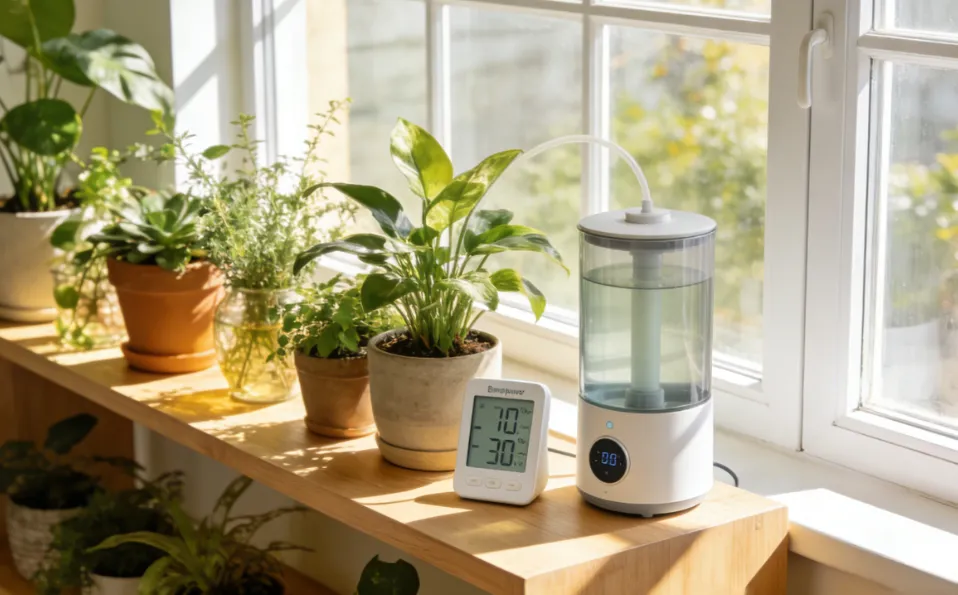
- Drip Irrigation Systems: These systems connect to a water source (like a faucet or a water tank) and deliver water to your plants via small tubes. They’re great for multiple plants (e.g., a shelf of succulents or a windowsill of herbs). My top pick: Letpot LPH-Air Hydroponic System. It’s a smart drip system that connects to your phone via Wi-Fi. You can set a watering schedule, monitor water levels, and even adjust the flow rate. It’s perfect for busy plant parents who have multiple plants. Bonus: It also has LED grow lights, so it’s great for plants that need extra light.
Pro tip: If you’re on a budget, you can make your own automatic waterer with a plastic bottle and a wick (cotton string). Cut the bottom off a plastic bottle, fill it with water, and insert a wick into the bottle (one end in the water, the other in the soil). The wick will draw water into the soil—simple and cheap!
4.3 Smart Humidity and Temperature Monitors (Keep Your Plants Comfortable)
Humidity and temperature are crucial for plant health, especially tropical plants. A smart humidity and temperature monitor tracks these levels and sends you alerts if they’re too high or too low. Many also connect to smart humidifiers or heaters, so they can automatically adjust the environment for your plants.
My top pick: Ecobee Smart Thermostat with Room Sensors. While it’s primarily a thermostat, it also tracks humidity and temperature in multiple rooms. You can set alerts for when humidity levels drop below a certain point (e.g., 40% for ferns), and it works with smart humidifiers to automatically increase humidity. It’s a great all-in-one device for your home and your plants.
Other great options: Aeotec Smart Humidity Sensor (works with smart home systems like Alexa and Google Home) and ThermoPro Digital Humidity Monitor (affordable and easy to use, no app needed).
4.4 Smart LED Grow Lights (Perfect for Low-Light Spaces)
If your home doesn’t get enough natural light, a smart LED grow light is a lifesaver. These lights mimic natural sunlight, so your plants can grow even in dark corners. Smart grow lights can be set to a schedule (e.g., 12 hours on, 12 hours off) and even adjusted via an app.
My top pick: Click & Grow Smart Garden 3. It’s a compact grow light system that’s perfect for herbs, succulents, and small plants. It has built-in LED grow lights, a self-watering reservoir, and pre-seeded pods (basil, mint, lettuce, etc.). You just plug it in, and it does the rest. I have one in my home office (which has no windows), and I grow fresh basil and mint year-round—perfect for cooking!
Other great options: Roleadro LED Grow Light (affordable and adjustable, works for large and small plants) andPhilips Hue Grow Light (works with Alexa and Google Home, so you can control it with your voice).
4.5 Smart Plant Apps (Your Personal Plant Care Assistant)
Smart plant apps are a great way to track your plants, get care tips, and even identify plant problems. Most apps let you add your plants to a “garden,” set watering reminders, and access care guides for specific plants. Some even use AI to identify plant diseases or pests.
My top pick: Planta. It’s a free app (with a premium version) that lets you add your plants, set watering reminders, and get personalized care tips. It even has a light meter to help you find the perfect spot for your plants. I use it to track all my plants, and it sends me reminders when it’s time to water—no more forgetting!
Other great options:PictureThis (uses AI to identify plants and plant problems) and Plant Parent (great for beginners, with simple care guides).
Part 5: Troubleshooting Common Plant Problems (Fix Them Before It’s Too Late)
Even with the best care, plants can have problems. But don’t panic—most issues are easy to fix if you catch them early. Here are the most common plant problems and how to solve them:
5.1 Yellow Leaves
Yellow leaves are one of the most common plant problems, and they can mean a few things:
- Overwatering: The most common cause. If the soil is moist and the leaves are yellow (with soft, mushy stems), you’re overwatering. Stop watering, let the soil dry out completely, and make sure the pot has drainage holes. If the roots are rotted (black, mushy), repot the plant in fresh soil.
- Underwatering: If the soil is dry and the leaves are yellow (with crispy edges), you’re underwatering. Water the plant thoroughly, and make sure to water more often.
- Too Much/Little Light: As we talked about earlier, yellow leaves with brown spots mean too much direct sun; pale, yellow leaves mean too little light. Move the plant to a better spot.
5.2 Brown Leaf Tips
Brown leaf tips are usually caused by dry air (low humidity) or overfertilizing. Here’s how to fix it:
- Dry Air: Increase humidity (mist, humidifier, group plants together).
- Overfertilizing: Flush the soil with water to remove excess salts, and dilute the fertilizer next time.
5.3 Pests (Aphids, Mealybugs, Spider Mites)
Pests are a nightmare, but they’re easy to treat if you catch them early. Common indoor plant pests include aphids (small green bugs), mealybugs (white, fuzzy bugs), and spider mites (tiny red bugs that leave webbing).
- Manual Removal: For small infestations, use a cotton swab dipped in rubbing alcohol to wipe off the pests.
- Insecticidal Soap: For larger infestations, use insecticidal soap (available at nurseries or online). Spray it on the leaves (top and bottom) to kill the pests.
- Neem Oil: A natural alternative to insecticidal soap. Mix neem oil with water (follow the instructions) and spray on the leaves. It’s safe for plants and pets.
Pro tip: Isolate the infested plant to prevent pests from spreading to other plants.
5.4 No Blooms (For Flowering Plants)
If your flowering plant (peace lily, African violet, orchid) isn’t blooming, it’s probably due to one of these reasons:
- Not Enough Light: Most flowering plants need bright, indirect light to bloom. Move the plant to a brighter spot.
- Not Enough Fertilizer: Use a fertilizer high in phosphorus to encourage blooms.
- Overwatering/Underwatering: Consistent watering is key for flowering plants. Make sure the soil is moist but not soggy.
Part 6: Final Thoughts—Embrace the Imperfection
At the end of the day, plant parenthood is about enjoying the process, not being perfect. I still kill plants occasionally (my latest casualty was a calathea—they’re finicky!), but that’s okay. Every mistake is a learning opportunity, and over time, you’ll get better at understanding your plants’ needs.
Remember: plants are living things, and they’re more resilient than you think. You don’t need a green thumb—you just need a little patience, the right plants for your space, and maybe a few smart tools to help you out. Whether you’re a beginner with one small succulent or a seasoned plant parent with a jungle of greenery, the goal is to create a space that feels alive, happy, and uniquely yours.
So go ahead—pick your first plant (or add to your collection), style it with love, and enjoy the beauty and benefits of indoor greenery. Your home (and your mood) will thank you.
Happy planting, friends!