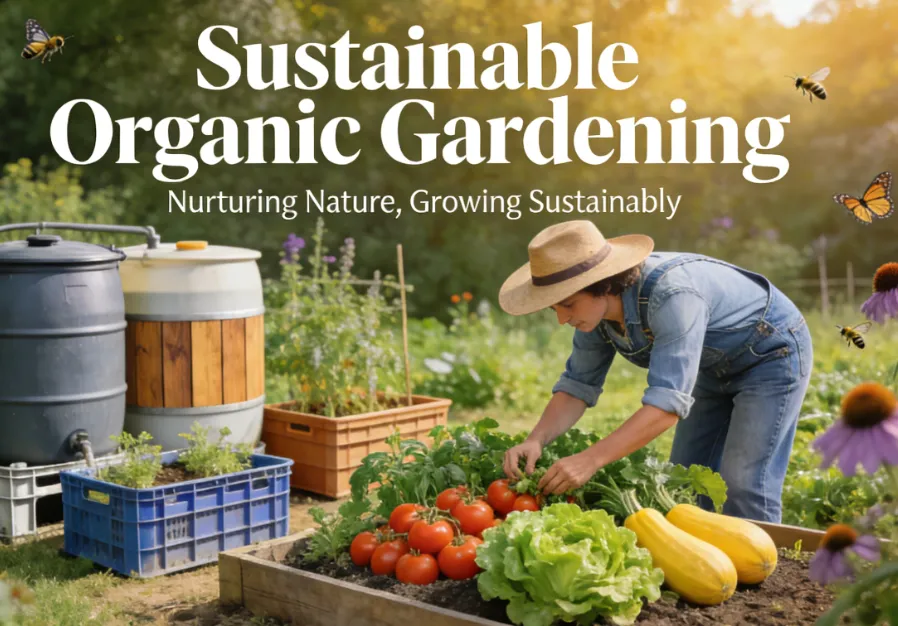
As a lifelong gardener living in the suburbs of Portland, Oregon, I’ve spent decades tending to my backyard plot—growing tomatoes that burst with sun-ripened sweetness, herbs that fill the air with fragrance, and flowers that attract bees and butterflies from miles around. But a few years ago, I started to notice something troubling: the plastic pots piling up in my garage, the water bill creeping higher each summer, and the chemical fertilizers I’d relied on leaving a residue in the soil. Like many of my fellow gardeners across Europe and North America, I began to ask myself: Can gardening—something that’s supposed to connect us to nature—actually be harming the planet? The answer, I discovered, is no—not if we embrace sustainable practices that work with nature, not against it.
Sustainable gardening isn’t just a trend; it’s a necessary shift in how we interact with our outdoor spaces. For those of us in the U.S. and Europe, where 77% of Americans participate inyard activities and over 80% of German households have a small garden, our gardening choices add up to a significant impact on the environment. From the soil we nurture to the water we use and the materials we discard, every decision we make in the garden can either support a healthy ecosystem or deplete it. The good news? You don’t need to be an expert or spend a fortune to make your garden more sustainable. By focusing on three key areas—organic gardening, water-saving irrigation systems, and recycled materials—we can create beautiful, productive gardens that are kind to the planet, save us money, and even yield better results. Let me share my journey and the practical tips I’ve learned along the way.
Organic Gardening: Nurture the Soil, Nourish the Planet
I used to think organic gardening was just a “hippie trend”—something my neighbor did with her compost pile and refusal to use pesticides. But after a season of watching my tomato plants wilt despite using chemical fertilizers, and noticing fewer bees visiting my flowers, I decided to give it a try. What I found was life-changing: my soil became richer, my plants were healthier, and I no longer had to worry about harmful chemicals seeping into the groundwater or ending up on my dinner plate. Organic gardening isn’t just about “going chemical-free”—it’s about creating a self-sustaining ecosystem where soil, plants, and beneficial organisms work together to thrive.
The foundation of organic gardening is healthy soil. Unlike conventional gardening, which relies on synthetic fertilizers to “feed” plants, organic gardening focuses on feeding the soil. Why? Because healthy soil is teeming with microorganisms—bacteria, fungi, and earthworms—that break down organic matter into nutrients plants can absorb. When we use chemical fertilizers, we kill these beneficial organisms, leaving the soil depleted and dependent on constant inputs. Over time, this leads to poor soil structure, erosion, and even water pollution as excess chemicals run off into streams and lakes.
So how do you start building healthy soil organically? It’s simpler than you might think. Here are the practices that have worked for me, and that align with the principles recommended by agricultural extensions across the U.S. and Europe:
1. Compost Everything (Yes, Everything)
Compost is the “black gold” of organic gardening, and it’s easier to make than you might imagine. I started with a simple compost bin in my backyard—nothing fancy, just a wooden frame I built from scrap lumber. Every week, I add fruit and vegetable scraps (apple cores, banana peels, coffee grounds, eggshells), yard waste (grass clippings, fallen leaves, small branches), and even shredded paper (uncoated, of course). I turn it every few weeks with a pitchfork to aerate it, and within 3-6 months, I have rich, dark compost that I work into my garden beds each spring.
The benefits are enormous: compost adds nutrients to the soil, improves its ability to retain water (reducing the need for irrigation), and feeds the microorganisms that keep the soil healthy. Plus, it keeps food and yard waste out of landfills—where it would break down and release methane, a potent greenhouse gas. In the U.S., food waste makes up nearly 30% of landfill content, so composting your garden and kitchen scraps is a small but impactful way to reduce your carbon footprint.
2. Practice Crop Rotation to Keep Pests at Bay
One of the biggest challenges of organic gardening is managing pests without synthetic pesticides. But I’ve found that crop rotation—alternating the types of plants you grow in each bed each year—is one of the most effective ways to prevent pest infestations and keep soil nutrients balanced. For example, tomatoes, peppers, and potatoes are all part of the Solanaceae family, and they’re prone to the same diseases and pests. If you plant them in the same spot year after year, those pests and diseases will build up in the soil. By rotating them with plants from a different family—like beans, peas, or lettuce—you break the cycle and keep your garden healthy.
I follow a simple rotation system: one year I plant heavy feeders (like tomatoes and corn) that use lots of nitrogen, the next year I plant givers (like beans and peas) that fix nitrogen back into the soil, and the third year I plant light feeders (like lettuce and carrots) that don’t require as many nutrients. This not only keeps pests away but also ensures my soil stays fertile without the need for chemical fertilizers. It’s a practice that’s been used for centuries, and it still works today.
3. Use Natural Pest Control Instead of Chemicals
When pests do show up—and they will—there are plenty of organic solutions that are just as effective as synthetic pesticides, without the harmful side effects. For example, I use neem oil to deter aphids and spider mites, diatomaceous earth to kill slugs and snails, and companion planting to repel pests naturally. Marigolds, for instance, repel nematodes and aphids, so I plant them around my tomatoes and peppers. Basil repels mosquitoes and flies, so I grow it near my patio. Ladybugs and lacewings are natural predators of aphids, so I attract them to my garden by planting flowers like daisies and cosmos.
I also avoid broad-spectrum pesticides, which kill beneficial insects like bees and butterflies along with the pests. Bees are critical for pollination—without them, we wouldn’t have many of the fruits and vegetables we love—and their populations are already declining due to habitat loss and pesticide use. By using natural pest control methods, we protect these vital pollinators and keep our garden ecosystem in balance.
4. Choose Native Plants for Low-Maintenance, Eco-Friendly Gardens
Another key part of organic gardening is choosing plants that are native to your region. Native plants are adapted to the local climate, soil, and pests, so they require less water, fertilizer, and maintenance than non-native plants. They also provide food and shelter for local wildlife, including bees, butterflies, and birds. In my garden, I’ve replaced some of my non-native flowers with native species like coneflowers, black-eyed Susans, and Oregon grape, and I’ve noticed a huge increase in the number of pollinators visiting my yard.
Native plants are also more resilient to climate change. As temperatures rise and rainfall patterns shift, native plants are better able to withstand droughts, heatwaves, and extreme weather than non-native plants. For example, in California, native succulents and drought-tolerant grasses are replacing water-thirsty lawns, helping homeowners save water and support local ecosystems. In Europe, native wildflowers like poppies and clover are being planted in gardens and public spaces to support bee populations.
Water-Saving Irrigation Systems: Conserve Water Without Sacrificing Your Garden
Water is one of our most precious resources, and gardening is one of the biggest uses of residential water. In the U.S., more than 9 billion gallons of water are used outdoors every day, primarily for landscape irrigation, and inefficient irrigation methods waste up to 50% of that water. In Europe, where droughts have become more frequent in recent years, water conservation is even more critical. But here’s the truth: you don’t have to let your garden wilt to save water. With the right irrigation system, you can water your plants efficiently, reduce waste, and lower your water bill—all while keeping your garden lush and productive.
I used to water my garden with a traditional sprinkler, which sprayed water everywhere—on the sidewalk, the driveway, and even the house. I’d often forget to turn it off, wasting gallons of water. But a few years ago, I invested in a drip irrigation system, and it’s been a game-changer. Not only have I cut my water usage by 50%, but my plants are healthier too—because the water is delivered directly to their roots, where it’s needed most.
1. Drip Irrigation: The Most Efficient Way to Water
Drip irrigation systems deliver water slowly and directly to the root zone of plants, using 20 to 50% less water than conventional sprinkler systems. Unlike sprinklers, which lose water to evaporation and runoff, drip systems target the roots, ensuring every drop is used by the plant. They’re also adaptable to any garden—whether you have a small container garden, a large vegetable plot, or a flower bed. I installed my drip system myself (it’s easier than you might think) using a kit from my local garden center, and it cost me less than $100. The system includes a timer, so I can set it to water early in the morning or late in the evening—when evaporation is lowest—and I never have to worry about forgetting to turn it off.
For those who want a more high-tech option, smart irrigation controllers are a great choice. These controllers connect to weather sensors and adjust the watering schedule based on rainfall, temperature, and humidity. They can even be controlled from your phone, so you can adjust the schedule while you’re away from home. Studies show that smart controllers can reduce water usage by up to 30%, making them a worthwhile investment for serious gardeners.
2. Rainwater Harvesting: Use Nature’s Water for Your Garden
Another great way to save water is to harvest rainwater. I installed a rain barrel under my downspout a few years ago, and it collects water from my roof every time it rains. I use this water to water my container plants and flower beds, and it’s completely free. Rainwater is also better for plants than tap water, because it doesn’t contain chlorine or other chemicals that can harm soil microorganisms.
Rainwater harvesting systems can be as simple as a single rain barrel or as complex as a large cistern that collects water for your entire garden. In many parts of the U.S. and Europe, there are even rebates and incentives for installing rainwater harvesting systems, making them more affordable. For example, in Oregon, homeowners can get a rebate of up to $500 for installing a rainwater harvesting system. In the UK, the government offers grants for sustainable gardening practices, including rainwater harvesting.
3. Mulch to Retain Moisture and Reduce Water Needs
Mulch is one of the most underrated tools for water conservation in the garden. I spread a 2-3 inch layer of mulch (wood chips, straw, or compost) around my plants every spring, and it helps retain moisture in the soil, reducing the need for irrigation. Mulch also suppresses weeds, which compete with plants for water and nutrients, and it breaks down over time, adding organic matter to the soil.
I prefer using organic mulch, like wood chips or straw, because it’s biodegradable and improves the soil. Inorganic mulch, like gravel or plastic, can also retain moisture, but it doesn’t add nutrients to the soil and can be harmful to the environment if not disposed of properly. Whatever type of mulch you choose, it’s a simple and effective way to save water and keep your garden healthy.
4. Choose Drought-Tolerant Plants to Reduce Water Usage
Even with the best irrigation system, choosing drought-tolerant plants can significantly reduce your water needs. Drought-tolerant plants are adapted to survive with little water, making them perfect for dry climates or for gardeners who want to conserve water. Some of my favorite drought-tolerant plants include lavender, rosemary, succulents, and ornamental grasses. These plants are not only low-maintenance but also beautiful, adding color and texture to my garden.
In recent years, many garden centers in the U.S. and Europe have started offering a wide variety of drought-tolerant plants, making it easy to create a water-efficient garden. You can also look for plants labeled “xeriscape,” which are specifically designed for water conservation. By choosing these plants, you’ll not only save water but also reduce the amount of time you spend watering and maintaining your garden.
Recycled Materials: Turn Trash into Garden Treasures
One of the most fun and creative ways to make your garden more sustainable is to use recycled materials. Every year, we throw away tons of plastic, glass, metal, and wood—materials that could be repurposed into planters, garden decor, and even tools. By using recycled materials, we reduce waste, save money, and add a unique, personal touch to our gardens. I’ve transformed everything from old plastic bottles to discarded pallets into garden treasures, and it’s been a rewarding experience.
In London, there’s a wonderful example of this: the Skip Garden, a mobile organic garden built using recycled construction materials like scrap metal bins, old水管, and wooden pallets. The garden is movable, so it can be relocated as construction projects change, and it uses recycled materials to create planters, seating, and even a small kitchen. It’s a perfect example of how recycled materials can be used to create a thriving, sustainable garden that brings the community together.
1. Repurpose Plastic Containers into Planters
Plastic bottles, jugs, and containers are some of the most common items in landfills, but they make great planters for small plants like herbs, succulents, and flowers. I cut off the top of plastic soda bottles, punch a few holes in the bottom for drainage, and fill them with soil. I also paint them with non-toxic paint to add color and personality. For larger plants, I use plastic buckets or detergent jugs—just make sure to clean them thoroughly before using them.
You can also repurpose plastic bags into planters. Simply fill a plastic bag with soil, tie the top closed, and cut a small hole in the side for the plant. This is a great way to use up plastic bags that would otherwise end up in the trash. Another idea is to use plastic food containers (like yogurt cups or takeout containers) as seedling trays—they’re the perfect size for starting seeds indoors.
2. Use Recycled Wood for Garden Beds and Decor
Wood is another great material to repurpose in the garden. I built my raised garden beds using old pallets—they’re free, easy to find, and perfect for creating a sturdy, raised bed. I just took the pallets apart, sanded down the wood to remove splinters, and nailed them together to form a rectangle. I lined the bottom with landscape fabric to prevent weeds from growing up, and filled it with soil. Raised beds are great for organic gardening because they allow you to control the soil quality, and they’re easier to maintain than traditional garden beds.
You can also repurpose old wooden furniture into garden decor. I turned an old wooden chair into a planter by removing the seat and filling it with soil and flowers. I also used old wooden crates to create shelves for my potted plants. Recycled wood adds a rustic, charming look to the garden, and it’s a great way to keep wood out of landfills.
3. Upcycle Glass and Metal into Garden Accents
Glass jars and bottles make beautiful garden accents. I collect old mason jars, clean them out, and fill them with water and flowers to create outdoor vases. I also use glass bottles as edging for my garden beds—they add a unique touch and help keep the soil in place. For a fun project, I painted old glass bottles with bright colors and placed them around my garden to catch the sunlight.
Metal is another great material to upcycle. I used old tin cans (cleaned and painted) as planters for herbs. I also used an old metal bucket as a rain gauge—just drill a small hole in the bottom and mark the inches on the side. Old metal signs, tools, and even kitchen utensils can be repurposed into garden decor. For example, I hung an old metal rake on the wall and used it to hold my gardening gloves and small tools.
4. Compost Non-Recyclable Organic Materials
Not all recycled materials have to be used as planters or decor—some can be turned into compost. As I mentioned earlier, food scraps, yard waste, and even shredded paper can be composted to create nutrient-rich soil. But you can also compost other organic materials, like coffee filters, tea bags (remove the staples), and even old cotton clothing (as long as it’s 100% cotton). These materials break down over time, adding organic matter to the soil and reducing waste.
The Big Picture: How Sustainable Gardening Benefits You and the Planet
Making your garden more sustainable isn’t just about helping the planet—it’s also about improving your own life. Organic gardening produces healthier, more flavorful fruits and vegetables that are free from harmful chemicals. Water-saving irrigation systems save you money on your water bill and reduce the time you spend watering your garden. Recycled materials add a unique, personal touch to your garden and save you money on expensive planters and decor.
But the benefits go beyond your backyard. Sustainable gardening helps reduce greenhouse gas emissions by keeping organic waste out of landfills and sequestering carbon in the soil. It protects pollinators like bees and butterflies, which are critical for our food supply. It reduces water pollution by eliminating the use of synthetic fertilizers and pesticides. And it creates habitats for wildlife, helping to preserve biodiversity.
In the U.S., the gardening market is worth over $480 billion annually, and in the UK, it’s over $47 billion. As more and more consumers demand sustainable products and practices, gardeners who embrace organic gardening, water-saving irrigation, and recycled materials are not only doing their part for the planet but also tapping into a growing market. Whether you’re a seasoned gardener or just starting out, there’s no better time to make your garden more sustainable.
Getting Started: Small Steps for Big Change
You don’t have to overhaul your entire garden overnight to make it more sustainable. Start small—pick one practice and stick with it. Maybe you start composting your kitchen scraps, or install a simple drip irrigation system for your flower beds. Maybe you repurpose a few plastic bottles into planters, or plant a few native plants in your yard. Every small step counts, and over time, those steps will add up to a big difference.
For me, sustainable gardening has been a journey of learning and experimentation. I’ve made mistakes along the way—like forgetting to turn off my drip system once (oops!) or planting non-native plants that didn’t thrive. But each mistake taught me something new, and now my garden is a thriving, sustainable space that brings me joy every day. It’s not perfect, but it’s a work in progress—and that’s okay. Sustainable gardening is about progress, not perfection.
So, grab your gardening gloves, head outside, and start making a difference. Your garden, your wallet, and the planet will thank you. And who knows—you might just discover a new passion for gardening that connects you even more deeply to nature.
What’s your first step toward a more sustainable garden? Let me know in the comments below—I’d love to hear your ideas and experiences!