As a lifelong gardener born and raised in the American Midwest, with family roots in rural England, I’ve spent decades experimenting with plants that thrive in the ever-changing seasons of North America and Europe. There’s nothing more disappointing than investing time, money, and love into a garden—only to watch your carefully chosen plants wilt in the summer heat, freeze in the winter cold, or fail to bloom when you’re craving that pop of color. Over the years, I’ve learned that the secret to a lush, vibrant garden year-round isn’t about picking the “prettiest” plants—it’s about choosing plants that are perfectly suited to the season, your local climate, and your unique yard conditions. Whether you’re tending to a small urban balcony in Chicago, a sprawling countryside garden in Tuscany, or a coastal landscape in California, this guide will help you select the right plants for spring, summer, fall, and winter—so you can enjoy a thriving garden that brings joy every month of the year.
Before we dive into each season, let’s cover a few foundational tips that every European and American gardener should know. First, know your hardiness zone. The USDA Plant Hardiness Zone Map is a lifesaver for gardeners in North America, dividing the continent into zones based on average winter lows—from Zone 1 (the coldest, with temperatures below -20°F) to Zone 13 (the warmest, above 40°F). In Europe, the EU Plant Hardiness Zone Map serves a similar purpose, with zones ranging from 1 (Arctic regions) to 11 (Mediterranean and subtropical areas). Choosing plants rated for your zone ensures they can survive the harshest temperatures of your area. Second, assess your yard’s microclimate: Is your garden mostly sunny, shaded, or a mix? Does it have well-drained soil, or is it prone to standing water? Are you near the coast (with salty air) or in the mountains (with harsh winds)? These factors matter just as much as your hardiness zone. Finally, consider your goals: Do you want a low-maintenance garden, a colorful flower bed, edible herbs and vegetables, or a mix of all three? Your goals will guide your plant choices and make your garden feel personal and purposeful.
Spring: Awakening Your Garden with Color and New Life
Spring is the most magical time in the garden—after a long, cold winter, the world wakes up, and every corner feels like a blank canvas. In Europe and North America, spring temperatures vary widely: while the American South and Mediterranean Europe start blooming in late February, the Northern U.S., Canada, and Northern Europe might not see consistent warmth until April or May. The key to spring planting is choosing plants that can tolerate cool temperatures, occasional frosts, and unpredictable weather—while still delivering that much-awaited burst of color.
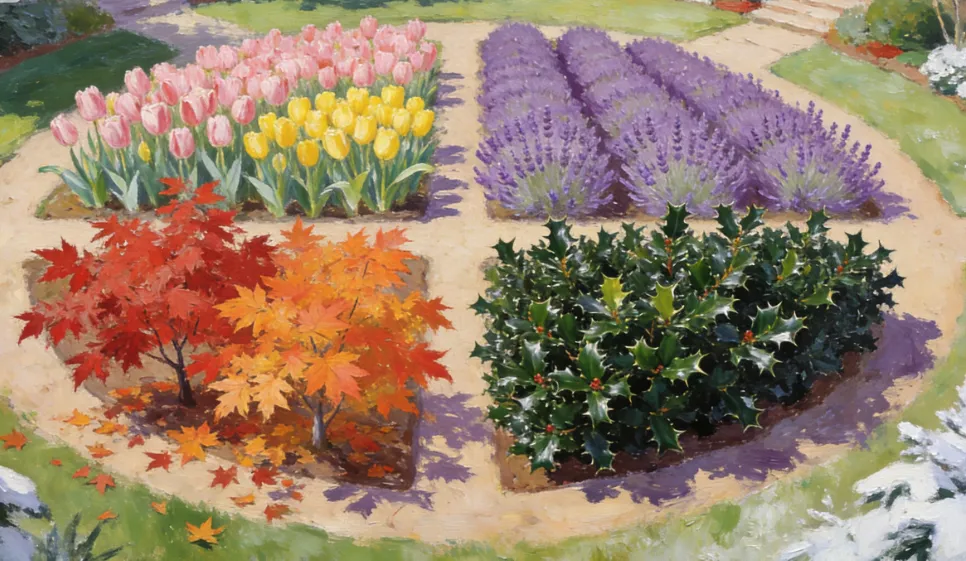
For flowering bulbs—the stars of spring—you can’t go wrong with classics that have been beloved by European and American gardeners for generations. Tulips (Tulipa) are a must: they come in every color imaginable, from soft pastels to bold reds and purples, and thrive in Zones 3-8. Plant them in the fall (6-8 weeks before the first frost), and they’ll emerge in early spring, adding height and vibrancy to your beds. In the Netherlands, where tulips are a national symbol, gardens like Keukenhof plant millions of bulbs each year, creating a sea of color that draws visitors from around the world. Daffodils (Narcissus) are another spring staple—hardy, deer-resistant, and easy to grow in Zones 3-9. Their bright yellow and white blooms signal the start of spring, and they naturalize easily, meaning they’ll come back year after year with minimal effort.
If you want early-blooming perennials (plants that come back every year), look no further than bleeding hearts (Dicentra spectabilis) and primroses (Primula). Bleeding hearts, with their delicate, heart-shaped pink or white flowers, thrive in partial shade and Zones 3-9—perfect for adding a romantic touch to shaded corners of your garden. Primroses, native to Europe and Asia, are available in a rainbow of colors and bloom as early as March in milder zones (Zones 4-8). They’re ideal for borders, containers, or rock gardens, and they’re a favorite among pollinators like bees, which are just waking up after winter.
For edible gardens, spring is the time to plant cool-weather vegetables and herbs that can handle light frosts. In both Europe and North America, peas, lettuce, spinach, and radishes are perfect for spring planting—they germinate quickly in cool soil and mature before the summer heat sets in. Herbs like chives, parsley, and mint also thrive in spring; plant them in a sunny spot, and you’ll have fresh herbs for cooking by late spring. If you’re in a milder zone (Zones 8-10), you can even start planting tomatoes and peppers in late spring, but be sure to protect them from any late frosts with a cloche or frost cloth.
Pro tip for spring: Don’t rush planting! Even if the weather feels warm, late frosts can kill tender new growth. Check your local frost dates (most gardening blogs and extension services list them) and wait until after the last frost to plant tender annuals (plants that only live one season) like marigolds and petunias. And don’t forget to add a layer of mulch around your new plants—this helps retain moisture, suppress weeds, and regulate soil temperature, giving your spring plants the best chance to thrive.
Summer: Thriving in Heat and Humidity (or Drought!)
Summer in Europe and North America is all about warmth, sunshine, and long days—but it also brings challenges: scorching heat, humidity (in the Eastern U.S. and Central Europe), or drought (in the Western U.S. and Southern Europe). The key to summer planting is choosing plants that are heat-tolerant, drought-resistant (if you live in a dry area), and able to handle the intense sun. You want plants that will keep your garden looking lush and colorful, even when the mercury rises above 85°F (30°C).
For summer flowers, annuals are a great choice because they bloom continuously from summer until the first frost. Zinnias (Zinnia elegans) are a summer favorite—they come in bright, bold colors (red, orange, pink, yellow) and thrive in full sun (6+ hours a day) in Zones 2-11. They’re easy to grow from seed, making them budget-friendly, and they’re a magnet for butterflies and hummingbirds. Marigolds (Tagetes) are another heat-tolerant annual—they repel pests like aphids and nematodes, making them a great companion plant for vegetables. They come in warm shades of orange, yellow, and red, and they’re perfect for borders, containers, or mass plantings.
Perennials that shine in summer include coneflowers (Echinacea), black-eyed Susans (Rudbeckia), and lavender (Lavandula). Coneflowers, native to North America, are hardy in Zones 3-8—they have large, daisy-like flowers in shades of pink, purple, and white, and they’re drought-tolerant once established. Black-eyed Susans, also native to North America, are cheerful, yellow flowers with dark centers that bloom from mid-summer to fall; they’re easy to grow, self-seed generously, and attract pollinators. Lavender, a staple in Mediterranean gardens, thrives in hot, dry conditions (Zones 5-9)—its fragrant purple blooms add a touch of elegance to any garden, and it’s perfect for drying to use in sachets or cooking. In France’s Provence region, lavender fields stretch for miles, attracting tourists and gardeners alike with their stunning purple hues and calming scent.
If you live in a drought-prone area (like California, the Southwest U.S., or parts of Spain and Italy), opt for xeriscaping plants—plants that require little to no water once established. Succulents (like sedum, echeveria, and agave) are perfect for this—they store water in their leaves, making them incredibly drought-tolerant. Yuccas and cacti are also great choices, adding texture and interest to your garden without the need for frequent watering. For a pop of color in dry gardens, try blanket flowers (Gaillardia)—they have bright red, orange, and yellow blooms and thrive in full sun and poor soil.
For edible summer gardens, focus on warm-weather vegetables that love the heat. Tomatoes, peppers, cucumbers, zucchini, and squash are all summer staples—they need full sun and consistent watering (but be careful not to overwater, as this can lead to root rot). Herbs like basil, oregano, and rosemary also thrive in summer—basil, in particular, loves heat, but it will wilt if it gets too dry, so be sure to water it regularly. If you have limited space, try container gardening: tomatoes, peppers, and herbs grow well in pots, and you can move them around to catch the sun.
Pro tip for summer: Water your plants in the morning or evening, when the sun is not at its peak. This prevents water from evaporating too quickly and helps avoid burning the leaves. Also, add a thick layer of mulch (like wood chips or straw) around your plants to retain moisture and keep the soil cool. If you’re going on vacation, ask a neighbor to water your plants, or invest in a drip irrigation system—this will keep your garden hydrated while you’re away.
Fall: Embracing Warm Hues and Preparing for Winter
Fall is a time of transition in the garden—leaves turn golden, red, and orange, and the air grows crisp. In Europe and North America, fall temperatures start to drop in September, with cooler weather settling in by October. The goal for fall planting is twofold: to enjoy the warm, rich colors of the season, and to plant perennials, bulbs, and shrubs that will establish roots over the winter and bloom beautifully the following spring. Fall is also a great time to harvest your edible garden and prepare it for the cold months ahead.
For fall color, trees and shrubs are the stars. Maple trees (Acer) are a classic choice—they come in a variety of species, from the sugar maple (native to North America) to the Japanese maple (popular in European gardens). Their leaves turn vibrant shades of red, orange, and yellow in fall, adding stunning color to your yard. Oak trees (Quercus), a symbol of strength and longevity in欧美 culture, also offer beautiful fall foliage—their leaves turn golden brown and often stay on the tree well into winter. For smaller spaces, try burning bush (Euonymus alatus)—a shrub that turns a brilliant red in fall, perfect for borders or hedges (hardy in Zones 4-8).
Fall-blooming flowers are another way to add color to your garden. Chrysanthemums (mums) are the quintessential fall flower—they come in shades of yellow, orange, red, purple, and white, and they bloom from September to November. They’re hardy in Zones 5-9, but if you live in a colder zone, you can dig them up and bring them indoors for the winter. Autumn crocuses (Colchicum) are a delightful surprise—unlike true crocuses, which bloom in spring, these flowers pop up in late fall, offering goblet-shaped blooms in pink, lavender, and white, even after the leaves have fallen. Their foliage appears in spring but dies back by summer, making them a unique addition to any fall garden. Japanese anemones, with their delicate white and pink blooms, add elegance to the fall garden—they’re tall, slender, and perfect for adding height to flower beds (hardy in Zones 5-9).
Fall is also the perfect time to plantbulbs for next spring. As mentioned earlier, tulips and daffodils should be planted in fall (6-8 weeks before the first frost), but you can also plant crocuses, hyacinths, and alliums. These bulbs need a period of cold dormancy to bloom, so planting them in fall gives them time to establish roots before winter. Be sure to plant them at the right depth (usually 2-3 times the height of the bulb) and in well-drained soil—bulbs rot easily in soggy soil.
For edible fall gardens, focus on cool-weather crops that can handle light frosts. Pumpkins, squash, and gourds are perfect for fall—they mature in late summer to early fall, and their bright orange and green colors add a festive touch to your garden. Kale, spinach, and Brussels sprouts also thrive in fall—kale, in particular, becomes sweeter after a light frost. This is also the time to harvest apples, pears, and grapes (if you have fruit trees or vines)—nothing tastes better than fresh, homegrown fruit in fall. After harvesting, clean up your vegetable garden: remove dead plants, add compost to the soil, and cover it with mulch to protect it from winter erosion.
Pro tip for fall: Don’t cut back all your perennials! Leave some of the dead stems and seed heads—they provide food and shelter for birds and other wildlife during the winter. For example, coneflower seed heads are a favorite food source for finches. Also, if you have roses, prune them lightly in fall to remove dead or diseased wood, but save heavy pruning for spring.
Winter: Adding Interest to a Dormant Garden
Many gardeners think winter means a barren, boring garden—but that couldn’t be further from the truth. In Europe and North America, winter gardens can be just as beautiful as summer gardens, with plants that add texture, color, and interest even in the coldest months. The key to winter planting is choosing evergreens, shrubs with interesting bark or berries, and cold-hardy perennials that can withstand freezing temperatures and snow.
Evergreens are the backbone of the winter garden—they stay green year-round, adding color and structure when other plants are dormant. Pine trees (Pinus), spruce trees (Picea), and fir trees (Abies) are classic evergreens, perfect for creating a winter wonderland. They’re hardy in Zones 2-8, depending on the species, and they provide shelter for birds and other wildlife. Holly (Ilex) is another evergreen favorite—its glossy green leaves and bright red berries add a festive touch to the winter garden, and it’s a symbol of Christmas in many欧美 cultures. Holly is hardy in Zones 5-9, and it’s perfect for hedges or standalone plants.
Shrubs with interesting bark are another great choice for winter. Dogwood (Cornus) is a standout—its red or yellow stems add a pop of color to the winter landscape, especially when covered in snow. European dogwood (Cornus sanguinea) has bright red stems, while yellow dogwood (Cornus sericea ‘Flaviramea’) has yellow stems—both are hardy in Zones 3-8. Birch trees (Betula) also have beautiful bark—their white, papery bark stands out against the snow, adding a touch of elegance to the winter garden. European birch (Betula pendula) is a popular choice in European gardens, while paper birch (Betula papyrifera) is native to North America.
Cold-hardy perennials that bloom in winter are rare, but they’re worth seeking out. Hellebores (Helleborus), also known as Christmas roses, are a winter gardener’s dream—they bloom from late winter to early spring, with flowers in shades of white, pink, purple, and green. They’re hardy in Zones 4-9, and they thrive in partial shade, making them perfect for shaded corners of your garden. Winter aconite (Eranthis hyemalis) is another early bloomer—its bright yellow flowers peek through the snow in late winter, signaling the start of spring. Native to Europe and parts of Asia, winter aconite is hardy in Zones 3-7 and thrives in partial shade and well-drained soil.
For winter containers, you can create beautiful displays with evergreens, branches, and berries. Use pine boughs, holly branches, and mistletoe to add color and texture, and add a few winter-blooming plants like hellebores or pansies (which can tolerate light frost). You can also add decorative elements like pine cones, berries, or small pumpkins to make your containers festive.
Pro tip for winter: Protect your plants from harsh winds and heavy snow. If you have tender evergreens, wrap them in burlap to shield them from wind damage. For shrubs and small trees, use stakes to support them if heavy snow is expected—this prevents branches from breaking. Also, keep an eye on your garden during thaws—melting snow can cause soil erosion, so add mulch if needed.
Final Tips for Year-Round Gardening Success
No matter what season it is, successful gardening in Europe and North America comes down to three things: choosing the right plants for your zone and microclimate, providing proper care (watering, mulching, pruning), and being patient. Gardening is a journey, not a destination—you’ll have good years and bad years, but every mistake is a learning opportunity.
Here are a few extra tips to help you create a thriving garden year-round:
- Start small: If you’re new to gardening, don’t try to plant a huge garden all at once. Start with a few containers or a small flower bed, and expand as you gain experience.
- Choose native plants: Native plants are adapted to your local climate, soil, and wildlife, so they’re easier to grow and require less maintenance. In North America, native plants like coneflowers, black-eyed Susans, and oak trees are great choices. In Europe, native plants like lavender, primroses, and European birch are perfect.
- Embrace imperfection: Not every plant will thrive, and that’s okay. Gardening is about enjoying the process, not achieving perfection. Even a “messy” garden can be beautiful and full of life.
- Learn from other gardeners: Join a local gardening club, follow gardening blogs (like The Spruce or Gardening Know How), or talk to your neighbors—they’ll have valuable tips and advice for your area.
Whether you’re a seasoned gardener or just starting out, choosing the right plants for each season will help you create a garden that brings joy year-round. From the bright blooms of spring to the warm hues of fall, and the quiet beauty of winter, your garden can be a sanctuary—a place to relax, connect with nature, and enjoy the changing seasons. So grab your gardening gloves, grab some seeds or plants, and get started—your perfect garden is waiting!